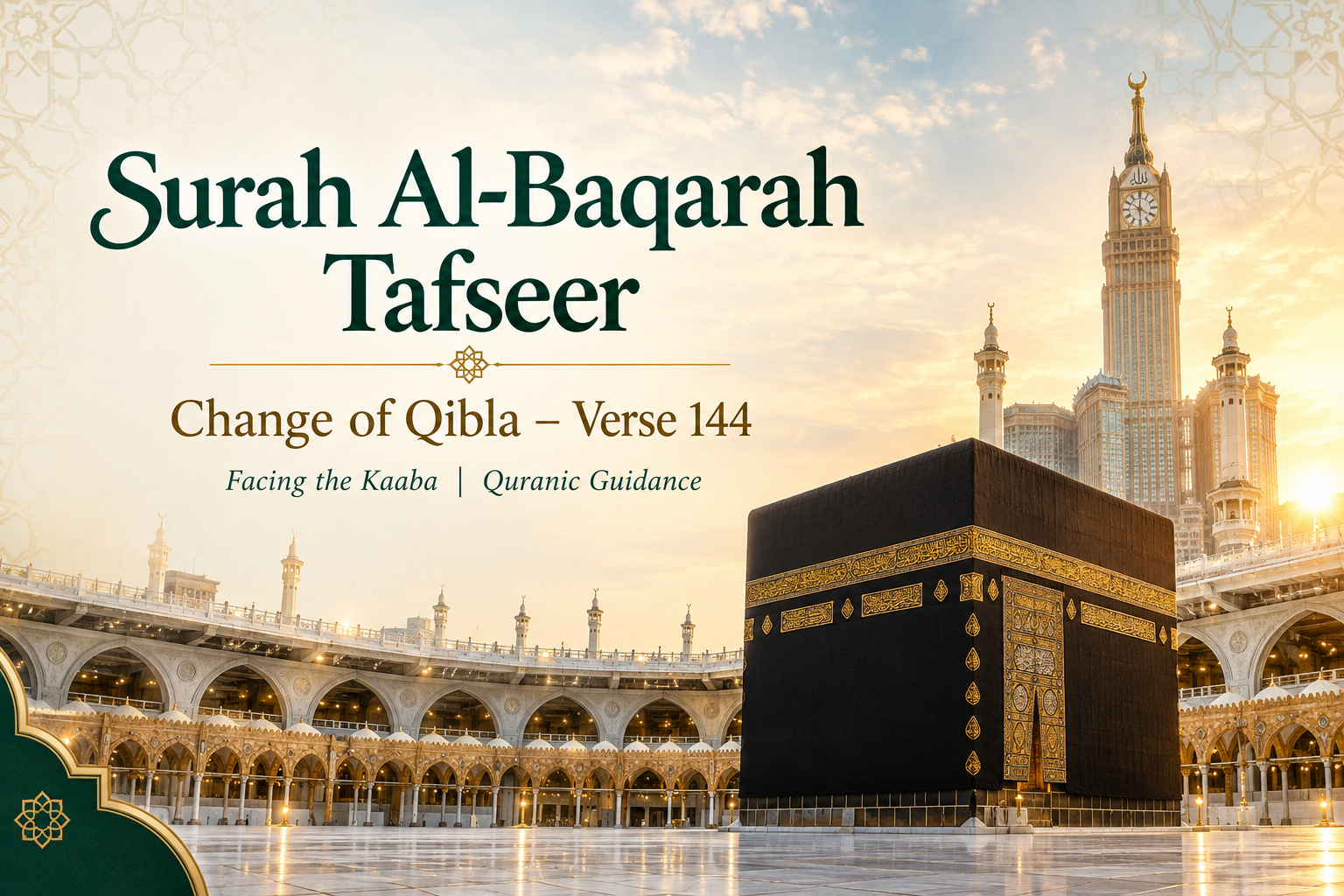
Surah Al-Baqarah Tafseer – Verse 144
Translation of Surah Al-Baqarah 2:144
“Indeed, We see you turning your face toward the heaven repeatedly. So We will surely turn you toward a direction that pleases you. So turn your face toward Al-Masjid Al-Haram, and wherever you are, turn your faces toward it. Indeed, those who were given the Scripture certainly know that this is the truth from their Lord. And Allah is not unaware of what they do.”
Surah Al-Baqarah Tafseer: Background of the Change of Qibla
The Surah Al-Baqarah Tafseer of this verse explains the important event of the Change of Qibla in Islam.
When the Prophet Muhammad ﷺ was in Makkah, he faced the Kaaba during prayer. After the migration to Madinah, Allah commanded the Muslims to face Bayt al-Maqdis in Jerusalem.
The Prophet ﷺ obeyed this command. However, he wished to face the Kaaba again. According to an authentic narration in Sahih al-Bukhari, the Prophet ﷺ prayed toward Jerusalem for sixteen or seventeen months before Allah commanded the Muslims to turn toward the Sacred Mosque.
Why Did the Prophet ﷺ Wish to Face the Kaaba?
The Prophet ﷺ had a deep connection with Makkah and the Kaaba. He was born and raised in Makkah, and the Kaaba was the House associated with Prophet Ibrahim عليه السلام.
Allah Almighty knew the desire of His Prophet ﷺ and revealed the command:
“So We will surely turn you toward a direction that pleases you.”
This shows the mercy of Allah and the honor given to the Prophet ﷺ.
The Command to Face Al-Masjid Al-Haram
Allah then commanded:
“So turn your face toward Al-Masjid Al-Haram.”
Muslims were commanded to face the Kaaba during prayer wherever they were.
The Surah Al-Baqarah Tafseer teaches that the Qibla is not simply a geographical direction. It is a symbol of obedience to Allah and unity among Muslims.
What Did the People of the Book Know?
Allah states that those who had been given the Scripture knew that this command was the truth from their Lord.
Some people questioned the change of direction, but the Quran makes clear that Allah knows their actions and intentions.
The Change of Qibla was also an important test of obedience and faith for the Muslim community.
The Importance of the Kaaba
The Kaaba has a central position in Islamic worship. Muslims around the world turn toward the same direction during Salah.
The Quran also describes the Sacred House as Qiyaman lil-nas, a means of establishment and stability for people.
According to the traditional tafseer provided for this article, Makkah is described as having a central spiritual significance. However, claims about Makkah being the exact geographical center of the earth should not be presented as an established scientific or Quranic fact without reliable evidence.
Lessons from Surah Al-Baqarah Tafseer
1. Obey Allah’s Commands
The Change of Qibla teaches Muslims to follow Allah’s commands with sincerity.
2. Trust Allah’s Timing
The Prophet ﷺ wished to face the Kaaba, but Allah chose the appropriate time for the command.
3. The Qibla Unites Muslims
Muslims across the world face one Qibla during prayer, showing the unity of the Ummah.
4. Allah Knows Our Hearts
Allah knew the heartfelt desire of His Prophet ﷺ before the command was revealed.
5. Divine Commands Can Be a Test
The change of Qibla tested the sincerity and obedience of the believers.
6. Allah Is Aware of All Actions
The verse reminds us that Allah is never unaware of what people do.
7. The Kaaba Has a Special Place in Islam
The Change of Qibla established the Kaaba as the permanent direction of Muslim prayer.
The Quran encourages believers to seek beneficial knowledge and understand its guidance. Read our Surah Al-Baqarah 143-144 Tafseer to learn more about obedience, faith, and divine guidance.
The Quran highlights the value of wisdom and understanding. Quran 2:269 teaches that whoever is granted wisdom has been given great good.
Conclusion
The Surah Al-Baqarah Tafseer of Verse 144 provides important guidance about obedience, faith, unity and trust in Allah.
The Change of Qibla in Islam was a significant event in the history of the Muslim Ummah. The Prophet Muhammad ﷺ followed Allah’s command, and Muslims were directed toward the Sacred Mosque in Makkah.
This verse reminds every Muslim that Allah knows what is in our hearts and that His commands are based on perfect wisdom.
May Allah grant us sincere faith, obedience and love for the Quran and Sunnah. Ameen.
سورۃ البقرہ تفسیر – آیت 144
سورۃ البقرہ کی آیت 144 میں قبلے کی تبدیلی کا ایک اہم واقعہ بیان کیا گیا ہے۔ اللہ تعالیٰ نے نبی کریم ﷺ کو مسجد حرام کی طرف رخ کرنے کا حکم دیا۔
سورۃ البقرہ آیت 144 کا ترجمہ
“تحقیق ہم دیکھ رہے ہیں آپ کے چہرے کا بار بار آسمان کی طرف پھرنا، پس ہم ضرور آپ کے چہرے کو اس قبلے کی طرف پھیر دیں گے جسے آپ پسند کرتے ہیں۔ پس آپ اپنا چہرہ مسجد حرام کی طرف پھیر دیں، اور تم جہاں کہیں ہو اپنے چہروں کو اسی کی طرف پھیرو۔ اور بے شک وہ لوگ جنہیں کتاب دی گئی ہے، البتہ وہ جانتے ہیں کہ یہ ان کے رب کی طرف سے حق ہے، اور اللہ ان کاموں سے غافل نہیں جو وہ کرتے ہیں۔”
تبدیلیٔ قبلہ کا پس منظر
سورۃ البقرہ تفسیر کے مطابق مکہ مکرمہ میں نبی کریم ﷺ کعبۃ اللہ کی طرف رخ کرکے نماز ادا فرماتے تھے۔ مدینہ منورہ ہجرت کے بعد اللہ تعالیٰ کے حکم سے آپ ﷺ نے بیت المقدس کی طرف رخ کرکے نماز ادا فرمائی۔
نبی کریم ﷺ اللہ تعالیٰ کے حکم کے مکمل پابند تھے، لیکن آپ ﷺ کی دلی خواہش تھی کہ دوبارہ کعبۃ اللہ کی طرف رخ کیا جائے۔
صحیح بخاری کی روایت کے مطابق نبی کریم ﷺ نے تقریباً سولہ یا سترہ ماہ بیت المقدس کی طرف نماز ادا فرمائی، پھر اللہ تعالیٰ نے قبلہ کعبۃ اللہ کی طرف تبدیل کرنے کا حکم نازل فرمایا۔
نبی کریم ﷺ کعبہ کی طرف رخ کیوں چاہتے تھے؟
نبی کریم ﷺ کا مکہ مکرمہ اور بیت اللہ سے گہرا تعلق تھا۔ آپ ﷺ مکہ مکرمہ میں پیدا ہوئے اور آپ ﷺ کی زندگی کا ابتدائی حصہ وہیں گزرا۔
کعبۃ اللہ حضرت ابراہیم علیہ السلام سے وابستہ مقدس گھر ہے اور مسلمانوں کے لیے نہایت عظیم مقام رکھتا ہے۔
اللہ تعالیٰ نے اپنے محبوب نبی ﷺ کی اس دلی خواہش کو جانتے ہوئے فرمایا:
“پس ہم ضرور آپ کے چہرے کو اس قبلے کی طرف پھیر دیں گے جسے آپ پسند کرتے ہیں۔”
یہ اللہ تعالیٰ کی رحمت اور اپنے نبی ﷺ کے