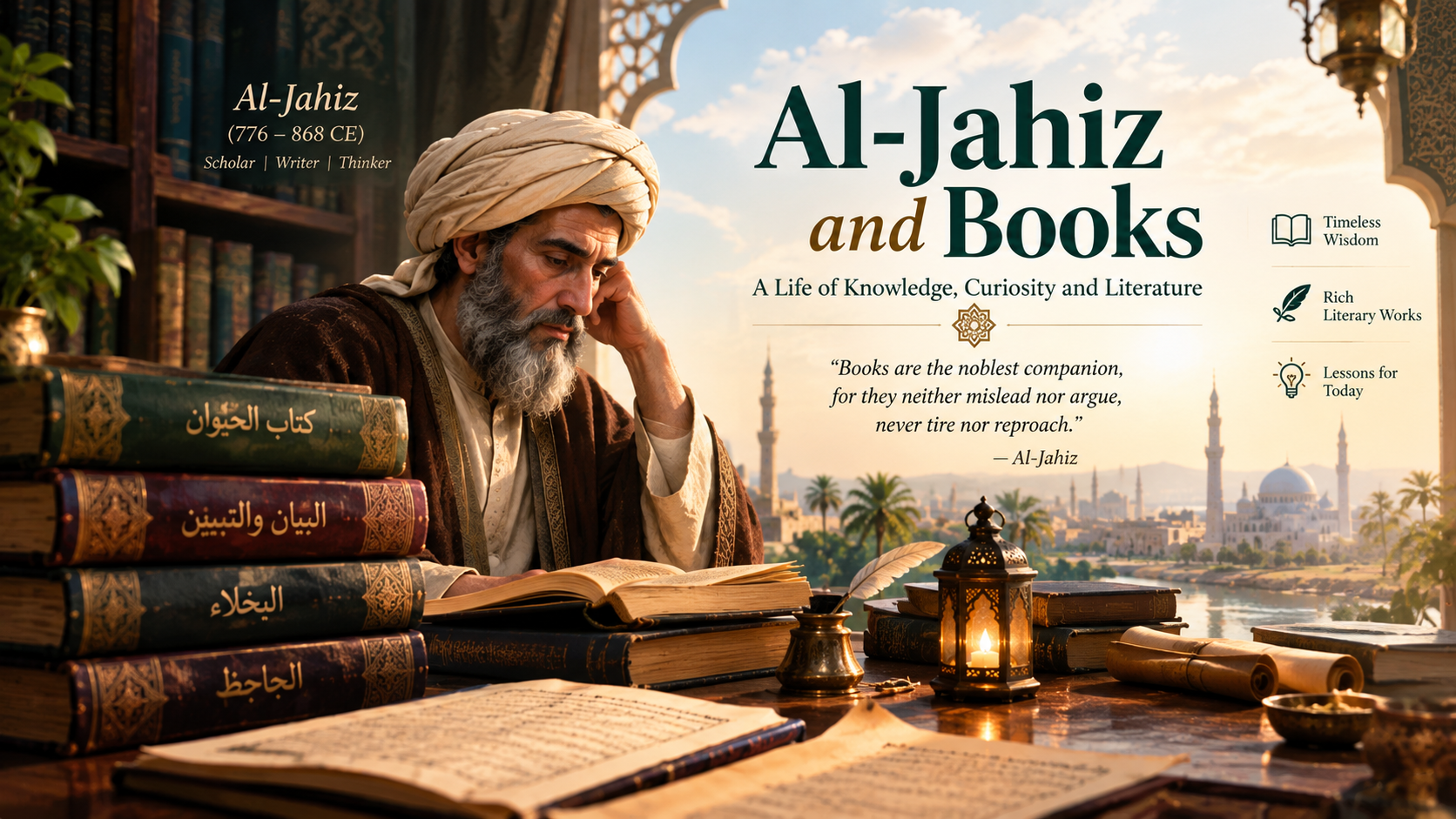
Al-Jahiz was one of the greatest prose writers, thinkers, and intellectual figures in the history of classical Arabic literature. His life was deeply connected with books, manuscripts, language, observation, debate, and the pursuit of knowledge.
His famous works, including Kitab al-Hayawan, Al-Bayan wa al-Tabyin, and Al-Bukhala, continue to preserve the intellectual atmosphere of the Abbasid era.
For Al-Jahiz, a book was never merely a collection of information. It was a companion, a teacher, a conversation, a window into forgotten worlds, and a bridge between generations.
1. Al-Jahiz and His Extraordinary Love of Books
A famous statement attributed to Al-Jahiz beautifully expresses the place of books in his life:
“Books gather something from every art and something from every branch of knowledge.”
For Al-Jahiz, collecting books meant collecting worlds.
One manuscript could contain the voice of a poet. Another could preserve the memory of a forgotten city. A third could carry the knowledge of a scholar who had died centuries earlier.
Books allowed him to communicate with people whom he could never meet.
That is why his relationship with books went far beyond ordinary reading. He studied them, compared them, questioned them, discussed their arguments, remembered their details, and combined their knowledge with what he observed in everyday life.
“For further historical information about Al-Jahiz, readers can explore the Encyclopaedia Iranica biography of Al-Jahiz.”
2. The Life of a Man Who Lived Among Manuscripts
The traditional accounts of Al-Jahiz portray a man whose home was filled with books and manuscripts.
In the Abbasid period, books were not produced with modern printing presses. Manuscripts had to be copied by hand. Scribes spent enormous amounts of time reproducing texts with pen and ink.
For a passionate reader like Al-Jahiz, acquiring a book could therefore mean much more than simply buying it. Books had to be found, copied, borrowed, studied, discussed, and preserved.
Historical accounts also describe his extraordinary dedication to reading. Al-Yaqut al-Hamawi records a statement attributed to Abu Hiffan describing Al-Jahiz as exceptionally devoted to books and learning.
This passion helps explain why his writings contain such a remarkable mixture of language, literature, history, observations, stories, humor, and intellectual arguments.
3. Al-Jahiz Turned Everyday Life into Knowledge
One of the most remarkable features of Al-Jahiz was his ability to find knowledge in ordinary things.
He did not restrict himself to formal scholarly subjects.
A conversation could become a source of knowledge.
A strange word could lead to a discussion of Arabic language.
An unusual animal could become the beginning of an observation about nature.
A story about a miser could reveal something about human psychology.
A speech could lead to an exploration of rhetoric and communication.
This intellectual curiosity made his writing unusually lively.
He moved between subjects with the freedom of a person participating in a large intellectual gathering. A story might lead to a linguistic observation; the linguistic observation might lead to history; history might lead to human behavior.
His books therefore feel less like dry academic manuals and more like conversations with an extraordinarily curious mind.
4. Al-Jahiz and Kitab al-Hayawan
Among the works associated with Al-Jahiz, Kitab al-Hayawan is especially important.
Despite its title, it is not simply a book about animals.
Animals become a doorway through which Al-Jahiz discusses observation, human behavior, language, society, experience, and reasoning.
He observes the natural world and asks questions about it.
He records traditions but also brings observation and reasoning into the discussion.
He tells stories but often uses them to explore wider ideas.
This combination makes Kitab al-Hayawan an important example of the broad intellectual curiosity of classical Arabic literature.
For Al-Jahiz, the world itself was like an open book.
He read the world first and then transformed what he observed into written knowledge.
5. Al-Jahiz and the Power of Conversation
Basra played an important role in the intellectual environment in which Al-Jahiz developed.
It was a place of scholars, linguists, poets, theologians, merchants, travelers, storytellers, and people from different communities and linguistic backgrounds.
For Al-Jahiz, these people were sources of knowledge.
He listened.
He observed.
He remembered.
He questioned.
And then he transformed conversations into literature.
This is one reason his works often feel as though many voices are present inside them.
A scholar speaks.
A poet responds.
A storyteller introduces an anecdote.
A linguist explains a word.
A narrator reports an unusual event.
And Al-Jahiz brings these voices together through his distinctive prose.
6. The Book as a Friend, Teacher, and Companion
One of the most beautiful themes associated with Al-Jahiz is his description of the book as a companion.
He writes in praise of books:
“The book is an excellent companion and intimate friend; it neither deceives you nor argues with you, neither tires you nor complains to you.”
This idea reveals something deeper than a simple love of reading.
It reveals the emotional power of books.
A book can accompany a person during solitude.
It can introduce a reader to people from another century.
It can preserve a forgotten language.
It can bring an entire civilization into a single room.
For Al-Jahiz, books were therefore not dead objects. They were living companions.
7. Al-Jahiz: The Writer Who Preserved a Civilization
The greatness of Al-Jahiz lies not only in the number of subjects he discussed but also in the way he preserved the intellectual life of his age.
In Al-Bayan wa al-Tabyin, he explored language, eloquence, speech, rhetoric, and communication.
In Al-Bukhala, he used stories of misers to reveal aspects of human behavior and society.
In Kitab al-Hayawan, he explored animals while discussing observation, nature, human life, and intellectual reasoning.
His writing captured voices that might otherwise have disappeared.
A word could survive because he recorded it.
A story could survive because he preserved it.
A social habit could survive in literature because he described it.
A forgotten voice could speak again because it found a place in his books.
The Famous Story of His Death Among Books
A famous traditional account describes Al-Jahiz spending his final days surrounded by his books and manuscripts. According to the popular story, a pile of books collapsed upon him, becoming a symbolic end to a life spent among books.
The exact historical details of this story should be treated cautiously, but the image has remained powerful because it captures the central theme of his life: a man who devoted himself to books and knowledge.
Whether taken literally or symbolically, the story represents something unforgettable.
He lived among books.
He thought through books.
He wrote through books.
And his intellectual legacy survived through books.
The Greatest Lesson from Al-Jahiz
The story of Al-Jahiz is ultimately not only a story about an ancient Arabic writer.
It is a story about curiosity.
It teaches us that knowledge grows when we observe carefully, read widely, ask questions, compare ideas, and remain willing to learn from unexpected sources.
A book can contain the voice of a person who died hundreds of years ago.
A manuscript can preserve the memory of a civilization.
A single page can introduce us to a world that no longer exists.
This was the extraordinary intellectual world of Al-Jahiz.
He did not simply read books.
He allowed books to become part of his life.
And perhaps this is why his voice still reaches us centuries later.
“The pursuit of knowledge can transform the way we think, improve our character, and help us follow life-changing principles in our daily lives.”
Conclusion: Why Al-Jahiz Still Matters Today
Al-Jahiz died centuries ago, but his conversation with readers never truly ended.
His books continue to introduce modern readers to the language, humor, observations, debates, stories, and intellectual culture of the Abbasid age.
He reminds us that reading is not simply collecting information.
Reading is entering into conversation with humanity.
A person reads a book, but a great book can preserve that person long after death.
Al-Jahiz spent his life collecting knowledge, observing the world, listening to people, and transforming what he encountered into literature.
His greatest legacy may therefore be simple:
Books preserve what time tries to erase.
And Al-Jahiz became one of the voices that books refused to let disappear.
الجاحظ: کتابوں کی رفاقت اور علم کی حیرت انگیز زندگی کے 7 سبق
الجاحظ عربی ادب کی تاریخ کے عظیم ترین نثر نگاروں، مفکرین اور اہلِ علم میں شمار ہوتے ہیں۔ ان کی زندگی کتابوں، مخطوطات، زبان، مشاہدے، علمی گفتگو اور حصولِ علم سے گہری وابستہ تھی۔
ان کی مشہور تصانیف میں کتاب الحیوان، البیان والتبیین اور البخلاء خاص طور پر اہم ہیں۔ ان کتابوں میں نہ صرف ادب بلکہ اپنے زمانے کی علمی، معاشرتی اور فکری زندگی کی جھلک بھی نظر آتی ہے۔
الجاحظ کے لیے کتاب محض معلومات کا ذخیرہ نہیں تھی۔ کتاب ان کے لیے ایک دوست، استاد، ہم نشین، گفتگو اور ان دنیاوں تک پہنچنے کا راستہ تھی جو ان کی آنکھوں سے اوجھل تھیں۔
1. الجاحظ اور کتابوں سے غیر معمولی محبت
کتابوں کے بارے میں الجاحظ سے منسوب ایک خوب صورت قول ہے:
«الكتب تجمع من كل فن طرفًا، ومن كل علم شيئًا.»
یعنی کتابیں ہر فن سے کچھ حصہ اور ہر علم سے کچھ نہ کچھ اپنے اندر جمع کر لیتی ہیں۔
الجاحظ کے لیے کتابیں جمع کرنا دراصل دنیا جمع کرنا تھا۔
ایک کتاب میں کسی شاعر کی آواز محفوظ تھی، دوسری میں کسی بھولی ہوئی بستی کی یاد، تیسری میں کسی ایسے عالم کی گفتگو جس سے صدیوں بعد بھی ملاقات ممکن تھی۔
کتاب کے ذریعے انسان ایسے لوگوں سے بھی گفتگو کر سکتا ہے جو دنیا سے رخصت ہو چکے ہیں۔
اسی لیے الجاحظ کا کتابوں سے تعلق صرف مطالعے تک محدود نہیں تھا۔ وہ کتابوں کو پڑھتے، ان کا موازنہ کرتے، سوال اٹھاتے، دلائل پر غور کرتے، مختلف روایات کو ایک دوسرے کے سامنے رکھتے اور پھر اپنے مشاہدات کو ان معلومات کے ساتھ جوڑتے تھے۔
2. مخطوطات کے درمیان زندگی گزارنے والا شخص
الجاحظ کے بارے میں تاریخی روایات ایک ایسے شخص کی تصویر پیش کرتی ہیں جس کی زندگی کتابوں اور مخطوطات کے درمیان گزری۔
عباسی دور میں کتاب حاصل کرنا آج کی طرح آسان کام نہیں تھا۔ اس زمانے میں کتابیں ہاتھ سے لکھی اور نقل کی جاتی تھیں۔ کاتب قلم، روشنائی اور کاغذ کے ذریعے ایک ایک عبارت کو دوبارہ تحریر کرتے تھے۔
چنانچہ کسی کتاب کا حصول صرف اسے خرید لینے کا نام نہیں تھا۔ اسے تلاش کرنا، نقل کروانا، پڑھنا، محفوظ کرنا اور اہلِ علم کے ساتھ اس پر گفتگو کرنا بھی علمی زندگی کا حصہ تھا۔
یاقوت الحموی نے ابو ہفان سے ایک روایت نقل کی ہے جس میں الجاحظ کی کتابوں اور علوم سے غیر معمولی محبت کا ذکر ملتا ہے۔
یہی علمی جنون اس بات کو سمجھنے میں مدد دیتا ہے کہ ان کی تصانیف میں زبان، ادب، تاریخ، معاشرت، حکایات، مشاہدات، مزاح اور فکری مباحث ایک ساتھ کیوں نظر آتے ہیں۔
3. الجاحظ نے روزمرہ زندگی کو علم بنا دیا
الجاحظ کی سب سے نمایاں خصوصیات میں سے ایک یہ تھی کہ وہ معمولی چیزوں میں بھی علم تلاش کر لیتے تھے۔
وہ صرف رسمی علوم تک محدود نہیں تھے۔
کسی شخص کی گفتگو ایک علمی موضوع بن سکتی تھی۔
کوئی نایاب لفظ لغت اور زبان کی بحث کا آغاز بن سکتا تھا۔
کسی جانور کا مشاہدہ فطرت اور انسانی رویوں تک لے جا سکتا تھا۔
کسی بخیل کی کہانی انسانی نفسیات اور معاشرتی رویوں کو سمجھنے کا ذریعہ بن سکتی تھی۔
کسی خطیب کی گفتگو بیان و بلاغت کے وسیع مباحث پیدا کر سکتی تھی۔
اسی تجسس نے ان کی نثر کو غیر معمولی زندگی عطا کی۔
وہ ایک موضوع سے دوسرے موضوع کی طرف اس طرح منتقل ہوتے جیسے کسی علمی مجلس میں مختلف لوگ باری باری گفتگو کر رہے ہوں۔
ایک قصہ زبان کے مسئلے تک پہنچ جاتا، زبان کا مسئلہ تاریخ کی طرف لے جاتا اور تاریخ انسانی عادات و رویوں کا دروازہ کھول دیتی۔
4. الجاحظ اور کتاب الحیوان
الجاحظ کی مشہور ترین تصانیف میں کتاب الحیوان کو خاص مقام حاصل ہے۔
اگرچہ اس کا عنوان حیوانات کی طرف اشارہ کرتا ہے، لیکن یہ صرف جانوروں کے بارے میں کتاب نہیں۔
حیوانات یہاں ایک ایسا دروازہ بن جاتے ہیں جس کے ذریعے الجاحظ مشاہدے، انسانی رویوں، زبان، معاشرے، تجربے اور استدلال جیسے موضوعات پر گفتگو کرتے ہیں۔
وہ فطرت کا مشاہدہ کرتے ہیں اور سوال اٹھاتے ہیں۔
وہ روایات نقل کرتے ہیں لیکن ساتھ ہی مشاہدے اور عقل کو بھی گفتگو میں شامل کرتے ہیں۔
وہ حکایات بیان کرتے ہیں مگر ان حکایات کے ذریعے بڑے فکری سوالات تک پہنچتے ہیں۔
یہی انداز کتاب الحیوان کو کلاسیکی عربی ادب کی ایک منفرد علمی تصنیف بناتا ہے۔
الجاحظ کے لیے دنیا خود ایک کھلی ہوئی کتاب تھی۔
وہ پہلے دنیا کو پڑھتے تھے اور پھر دنیا سے حاصل کیے ہوئے مشاہدات کو کتاب میں محفوظ کر دیتے تھے۔
5. الجاحظ اور گفتگو کی طاقت
بصرہ اس علمی ماحول میں ایک اہم مقام رکھتا تھا جس میں الجاحظ کی فکری شخصیت پروان چڑھی۔
یہاں علما، لغت کے ماہرین، شعرا، متکلمین، قصہ گو، تاجر، مسافر اور مختلف علاقوں سے آنے والے لوگ موجود تھے۔
الجاحظ ان سب سے سیکھتے تھے۔
وہ سنتے تھے۔
مشاہدہ کرتے تھے۔
یاد رکھتے تھے۔
سوال کرتے تھے۔
اور پھر ان گفتگوؤں کو اپنی نثر میں منتقل کر دیتے تھے۔
اسی لیے ان کی کتابیں پڑھتے ہوئے محسوس ہوتا ہے جیسے ان کے اندر بہت سی آوازیں موجود ہوں۔
ایک عالم گفتگو کر رہا ہے۔
ایک شاعر جواب دے رہا ہے۔
ایک قصہ گو حکایت سنا رہا ہے۔
ایک لغوی کسی لفظ کی وضاحت کر رہا ہے۔
اور الجاحظ ان تمام آوازوں کو اپنی منفرد نثر میں ایک دوسرے سے ملا رہے ہیں۔
6. کتاب: دوست، استاد اور ہم نشین
الجاحظ کے ہاں کتاب کی سب سے خوب صورت تصویر یہ ہے کہ وہ اسے ایک مونس اور ساتھی سمجھتے ہیں۔
ان سے منسوب عبارت ہے:
«الكتاب نعم الجليس والأنيس، لا يغريك ولا يماريك، ولا يملك ولا يعاتبك.»
یعنی کتاب کیا ہی بہترین ہم نشین اور مونس ہے؛ نہ تمہیں بہکاتی ہے، نہ تم سے جھگڑتی ہے، نہ تمہیں اکتاتی ہے اور نہ تم سے شکوہ کرتی ہے۔
یہ صرف کتاب کی تعریف نہیں بلکہ تنہائی کے اندر کتاب کی طاقت کا اعتراف بھی ہے۔
کتاب انسان کا ساتھ تنہائی میں دے سکتی ہے۔
وہ صدیوں پہلے گزر جانے والے لوگوں سے ملاقات کرا سکتی ہے۔
وہ کسی بھولی ہوئی زبان کو محفوظ رکھ سکتی ہے۔
وہ ایک پورے معاشرے اور تہذیب کو ایک چھوٹے سے کمرے میں لے آ سکتی ہے۔
الجاحظ کے لیے کتابیں اسی لیے بے جان اشیا نہیں تھیں بلکہ زندہ صحبت تھیں۔
7. الجاحظ: ایک ایسی شخصیت جس نے ایک تہذیب کو محفوظ کیا
الجاحظ کی عظمت صرف اس میں نہیں کہ انہوں نے بہت سے موضوعات پر لکھا، بلکہ اس میں بھی ہے کہ انہوں نے اپنے زمانے کی علمی اور معاشرتی زندگی کے بہت سے رنگ محفوظ کر دیے۔
البیان والتبیین میں زبان، فصاحت، بلاغت، خطابت اور انسانی اظہار کے مختلف پہلو سامنے آتے ہیں۔
البخلاء میں بخیل لوگوں کے قصوں کے ذریعے انسانی عادات، نفسیات اور معاشرتی رویوں کی کئی پرتیں سامنے آتی ہیں۔
کتاب الحیوان میں جانوروں کے ذریعے مشاہدے، فطرت، انسانی زندگی اور عقل و استدلال کے مختلف پہلو زیرِ بحث آتے ہیں۔
ان کی کتابوں نے بہت سی ایسی آوازوں کو محفوظ کر دیا جو شاید وقت کے ساتھ ہمیشہ کے لیے خاموش ہو جاتیں۔
کوئی نایاب لفظ تھا تو وہ کتاب میں محفوظ ہو گیا۔
کوئی قصہ تھا تو وہ تحریر میں باقی رہ گیا۔
کوئی معاشرتی عادت تھی تو وہ ادب کا حصہ بن گئی۔
کوئی بھولی ہوئی آواز تھی تو اسے دوبارہ بولنے کا موقع مل گیا۔
کتابوں کے درمیان موت کی مشہور روایت
الجاحظ کی وفات کے بارے میں ایک مشہور روایت بیان کی جاتی ہے کہ وہ اپنی زندگی کے آخری ایام میں کتابوں اور مخطوطات کے درمیان تھے اور کتابوں کا ایک انبار ان پر گر گیا۔
اس واقعے کی تمام تفصیلات کو تاریخی طور پر قطعی سمجھنا محتاط رویہ نہیں ہوگا، لیکن یہ روایت اس لیے بہت طاقتور بن گئی کہ یہ الجاحظ کی پوری زندگی کے مرکزی استعارے کو بیان کرتی ہے۔
وہ کتابوں کے درمیان جئے۔
کتابوں کے ذریعے سوچا۔
کتابوں کے ذریعے لکھا۔
اور ان کی فکری میراث بھی کتابوں ہی کے ذریعے آنے والی نسلوں تک پہنچی۔
اگر اس واقعے کو ایک علامتی تصویر کے طور پر دیکھا جائے تو یہ ان کی کتاب دوستی کی انتہائی خوب صورت نمائندگی کرتا ہے۔
الجاحظ کی زندگی کا سب سے بڑا سبق
الجاحظ کی داستان صرف ایک قدیم عربی ادیب کی داستان نہیں۔
یہ تجسس کی داستان ہے۔
یہ ہمیں سکھاتی ہے کہ علم اس وقت بڑھتا ہے جب انسان غور سے مشاہدہ کرے، وسیع مطالعہ کرے، سوال اٹھائے، مختلف خیالات کا موازنہ کرے اور غیر متوقع ذرائع سے بھی سیکھنے کے لیے تیار رہے۔
ایک کتاب میں صدیوں پہلے مر جانے والے شخص کی آواز محفوظ ہو سکتی ہے۔
ایک مخطوطہ کسی پوری تہذیب کی یاد کو محفوظ رکھ سکتا ہے۔
ایک صفحہ ایسی دنیا سے متعارف کرا سکتا ہے جو اب باقی نہیں رہی۔
یہی وہ فکری دنیا تھی جس میں الجاحظ نے اپنی زندگی گزاری۔
انہوں نے صرف کتابیں نہیں پڑھیں۔
انہوں نے کتابوں کو اپنی زندگی کا حصہ بنا لیا۔
اور شاید اسی لیے صدیوں بعد بھی ان کی آواز ہم تک پہنچ رہی ہے۔
نتیجہ: آج بھی الجاحظ کیوں اہم ہیں؟
الجاحظ کو دنیا سے رخصت ہوئے کئی صدیاں گزر چکی ہیں، لیکن ان کی گفتگو آج بھی ختم نہیں ہوئی۔
ان کی کتابیں آج بھی قاری کو عباسی دور کی زبان، مزاح، مشاہدات، علمی مباحث، قصوں اور معاشرتی زندگی سے متعارف کراتی ہیں۔
وہ ہمیں یاد دلاتے ہیں کہ مطالعہ صرف معلومات جمع کرنے کا نام نہیں۔
مطالعہ دراصل انسانیت کے ساتھ گفتگو کا نام ہے۔
انسان کتاب پڑھتا ہے، لیکن ایک عظیم کتاب اپنے پڑھنے والے کو زمانے کے بعد بھی محفوظ رکھ سکتی ہے۔
الجاحظ نے اپنی زندگی علم جمع کرنے، دنیا کا مشاہدہ کرنے، لوگوں کو سننے اور ان مشاہدات کو ادب میں ڈھالنے میں گزار دی۔
شاید ان کی سب سے بڑی میراث یہی ہے:
کتابیں وہ چیزیں محفوظ کر دیتی ہیں جنہیں وقت مٹانے کی کوشش کرتا ہے۔
اور الجاحظ ان آوازوں میں سے ایک ہیں جنہیں کتابوں نے بھولنے نہیں دیا۔